
Indian stock markets saw a significant rebound, with the Sensex jumping nearly 790 points, primarily fuelled by strong buying interest in telecom, pharma, and private banking shares, despite a volatile trading session and a weakening rupee.

Benchmark indices Sensex and Nifty ended marginally higher on Wednesday as a sharp decline in IT blue-chip stocks restricted the rally in the markets.
India's exports to the US contracted 8.6 per cent to $6.3 billion in October, while imports rose 13.9 per cent to $4.5 billion leading to a trade surplus of $1.8 billion during the month.

Macroeconomic data, global geopolitical developments and rising concerns over AI-related disruptions are likely to dictate sentiment in the stock market next week, even as investors may remain cautious amid ongoing volatility, according to analysts.
'The real story of 2025 is that India officially stopped being a 'market of the future' and started acting as the world's primary economic engine.'

Jaguar Land Rover will begin assembling premium cars at its new Tamil Nadu plant on February 9, marking a step towards full-scale luxury car manufacturing in India.

As the rupee remains under pressure due to several headwinds and the uncertainty around the India-US trade deal, the Reserve Bank of India (RBI) has been stepping in only to calm volatility, not to stop the fall.

Prime Minister Narendra Modi emphasized the strong partnership between India and the UK, highlighting its importance for global stability and economic progress amidst global uncertainty. Discussions covered trade, defense cooperation, and geopolitical issues.

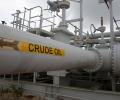
India will maintain multiple sources for crude oil purchases and diversify them to ensure stability in the supply chain with national interests remaining the "guiding factor" for the procurement, Foreign Secretary Vikram Misri said.

There was no reference to trade in talks between top leaders of India and the United States during the India-Pakistan military conflict, government sources said on Monday after American President Donald Trump claimed that he pressured New Delhi and Islamabad to stop hostilities by threatening to cut trade with both countries.
'The President's expectations shifted. The goal post moved and India didn't realize that the goal post had moved.'

The company said Valcambi was the engine driving the group's business, but Valcambi's audited accounts showed revenues that were only a fraction of what the group reported. That raised a major red flag.

So far this year, the rupee has fallen by 4.2 per cent, the worst among its Asian peers.

Domestic PMI data, US Federal Reserve meeting minutes and the progress on India-US trade deal negotiations are likely to influence movement in the equity market in the week ahead, according to analysts. Moreover, the trading activity of foreign investors would also influence the equity market trends.

The Reserve Bank of India (RBI) on Friday delivered a 25 basis point (bps) repo rate cut analysts expected, driven by the strong 8.2 per cent GDP growth in the September quarter. However, analysts do not expect a runaway market rally as the impact of US tariffs continues.

India has a comparative edge over key competitors in a majority of products it exports to the US and stands to gain market share as the US raises tariffs on its major trade partners, NITI Aayog said on Monday. In its quarterly trade report, it recommended that the government fast-track the India-US free trade agreement with time-bound goals to resolve non-tariff barriers and finalise digital trade rules on data flows and e-signatures to support services exports.

In an event-heavy week, stock investors will track ongoing quarterly earnings, the US Federal Reserve's interest rate decision, and macroeconomic data for market direction, analysts said. Moreover, progress in India-US trade negotiations will remain a key focus for investors, an expert said.
Equity investors are up for an eventful trading week ahead as the 90-day suspension period of the reciprocal tariffs announced by US President Donald Trump ends on July 9, analysts said, adding that a positive outcome from the trade negotiations could further lift market sentiment, particularly benefiting trade-sensitive sectors.
India would neither succumb to the Americans on issues of national security, such as its defence ties with Russia, nor cede ground on its domestic interests in the agriculture and dairy sectors.

The rupee appreciated 53 paise to close at 89.67 against the US dollar on Friday, supported by corporate dollar inflows and easing crude oil prices. Forex traders said a positive trend in domestic equities and Brent crude oil prices hovering near $59 per barrel supported the domestic unit at lower levels.

Gold and silver prices saw a significant decline in the national capital, with silver falling by Rs 7,800 to Rs 2.43 lakh per kilogram and gold by Rs 1,500 to Rs 1.54 lakh per 10 grams, as investors booked profits amid persistent doubts over the durability of the West Asia ceasefire.

Gold prices dropped by Rs 4,100 to Rs 121,800 per 10 grams in the national capital and slipped below $4,000 an ounce in the global markets on Tuesday as easing US-China trade tensions dampened safe-haven appeal. According to the All India Sarafa Association, the precious metal had closed at Rs 125,900 per 10 grams on Monday.

India, the world's fourth largest economy, is set to maintain the 'goldilocks' phase with tailwinds of good growth, low inflation and robust banking performance as well as reform initiatives poised to sustain the economic pace witnessed during 2025.

Defence Minister Rajnath Singh assures India's energy security amidst West Asia tensions, highlighting naval protection of tankers and readiness to counter cross-border terrorism.

India has raised concerns with the United States regarding the cancellation of scheduled H1B visa interviews for Indian applicants due to enhanced vetting measures. Both countries are engaged in discussions to address the disruptions caused by the delays.

India and the UK will sign a free trade agreement on Thursday in London that will allow export of labour-intensive products such as leather, footwear and clothing at concessional rates, while making imports of whisky and cars from Britain cheaper. The pact also helps double trade between the two economies to $120 billion by 2030.

Real GDP growth surprised on the upside in 2025, but weaker nominal growth, trade uncertainty, and soft demand signal a bumpier road ahead.

The India-EU free trade deal could help Indian-made cars enter Europe at lower costs and challenge Chinese dominance.

In their talks, Modi and Merz are likely to deliberate on trade and investment ties as New Delhi is looking at deepening economic engagement with Europe against the backdrop of Washington's 50 percent tariff on Indian goods, people familiar with the matter said.
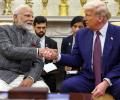
'I certainly hope the two can avoid a trade war and believe they will.' 'I expect some in India will push for retaliatory tariffs if the Trump administration applies significant reciprocal tariffs.'

Several member states of the World Trade Organisation voiced frustration after India's demands for concessions on agricultural stockpiling led to the collapse of the first major global trade reform pact in two decades.

The relations between New Delhi and Washington are on a downturn after Trump doubled tariffs on Indian goods to a whopping 50 per cent, including a 25 per cent additional duties for India's purchase of Russian crude oil.

Silver prices surged by Rs 11,800 to Rs 2.57 lakh per kg and gold advanced by Rs 3,000 to Rs 1.58 lakh per 10 grams in the national capital, driven by fresh buying from jewellers and stockists ahead of Akshaya Tritiya.

Additional Sessions Judge Amit Bansal directed the stay after the Delhi Police challenged the bail order by Duty Magistrate Vanshika Mehta, and listed the matter on March 6 for further proceedings.

Commerce and Industry Minister Piyush Goyal will accompany Prime Minister Narendra Modi to London for the signing of the free trade agreement between India and the UK on July 24, an official said on Monday. The two countries announced the conclusion of the negotiations for the trade agreement on May 6.
Since May 10, when Trump announced on social media that India and Pakistan had agreed to a "full and immediate" ceasefire after a "long night" of talks mediated by Washington, he has repeated his claim on several occasions.

'The bigger unknown remains global geopolitics, which is inherently unpredictable, including developments in our neighbourhood.' 'Another concern is the increasing tilt of government finances towards welfare subsidies, especially at the state level.' 'This could constrain capital expenditure, which is critical for long-term growth.'
Trump said that leaders in India and Pakistan are "great leaders" and "they understood, and they agreed, and that all stopped".

Infosys shares experienced a significant drop, hitting a 52-week low, after the company announced its Q4FY26 results and provided a modest revenue growth guidance of 1.5-3.5 per cent in constant currency for FY27, falling below market expectations and raising concerns about AI-led deflation and margin pressures.
